
RESEARCH
Wild Flag Studios’ research practice investigates how mycorrhizal networks can be designed into urban environments to support plant connectivity, soil health, and ecological resilience.
Design of the Soil Conduit
Focusing on the hidden infrastructures beneath cities, our work explores how soil structure, material flows, and fungal networks influence the performance of urban landscapes.
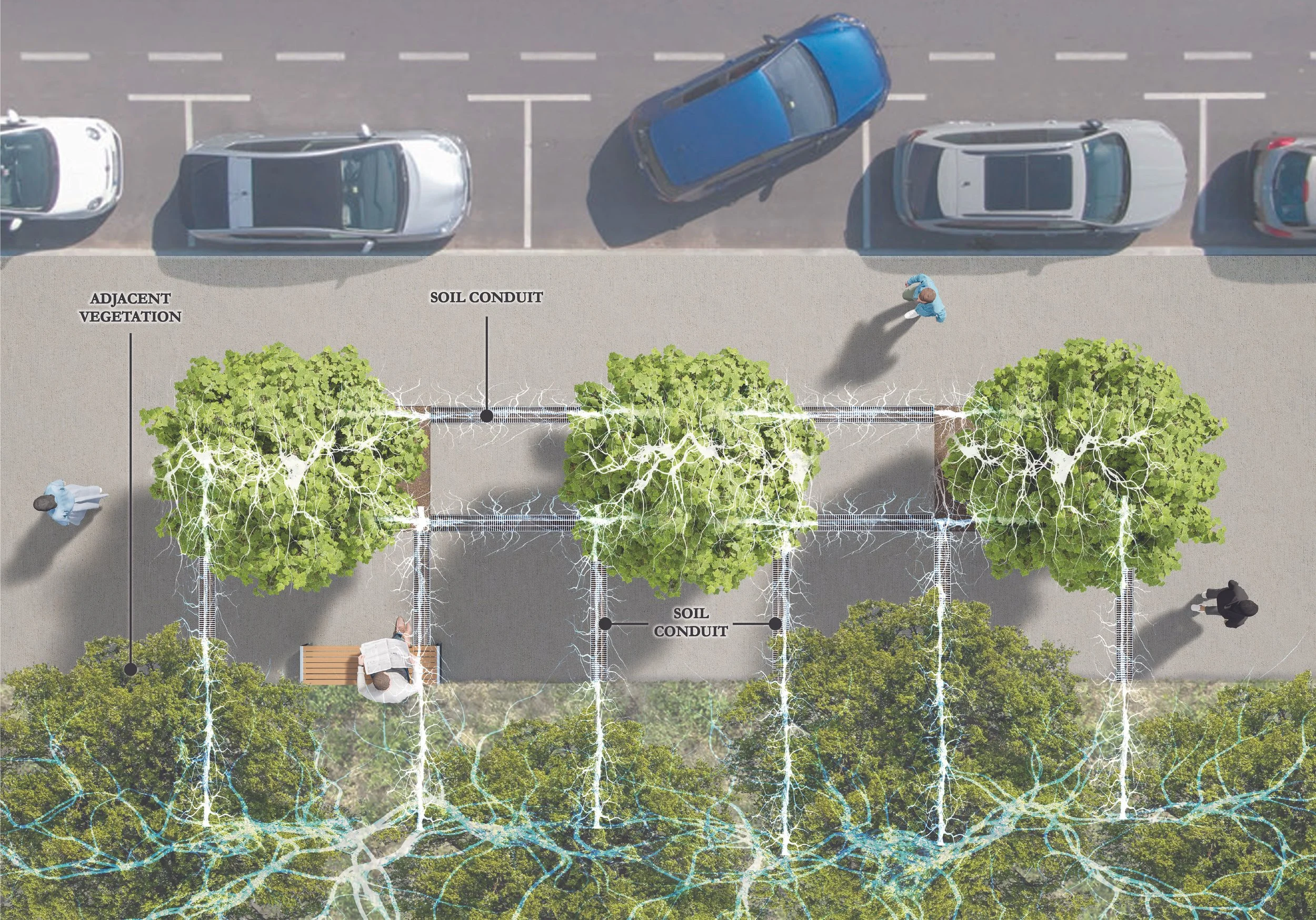
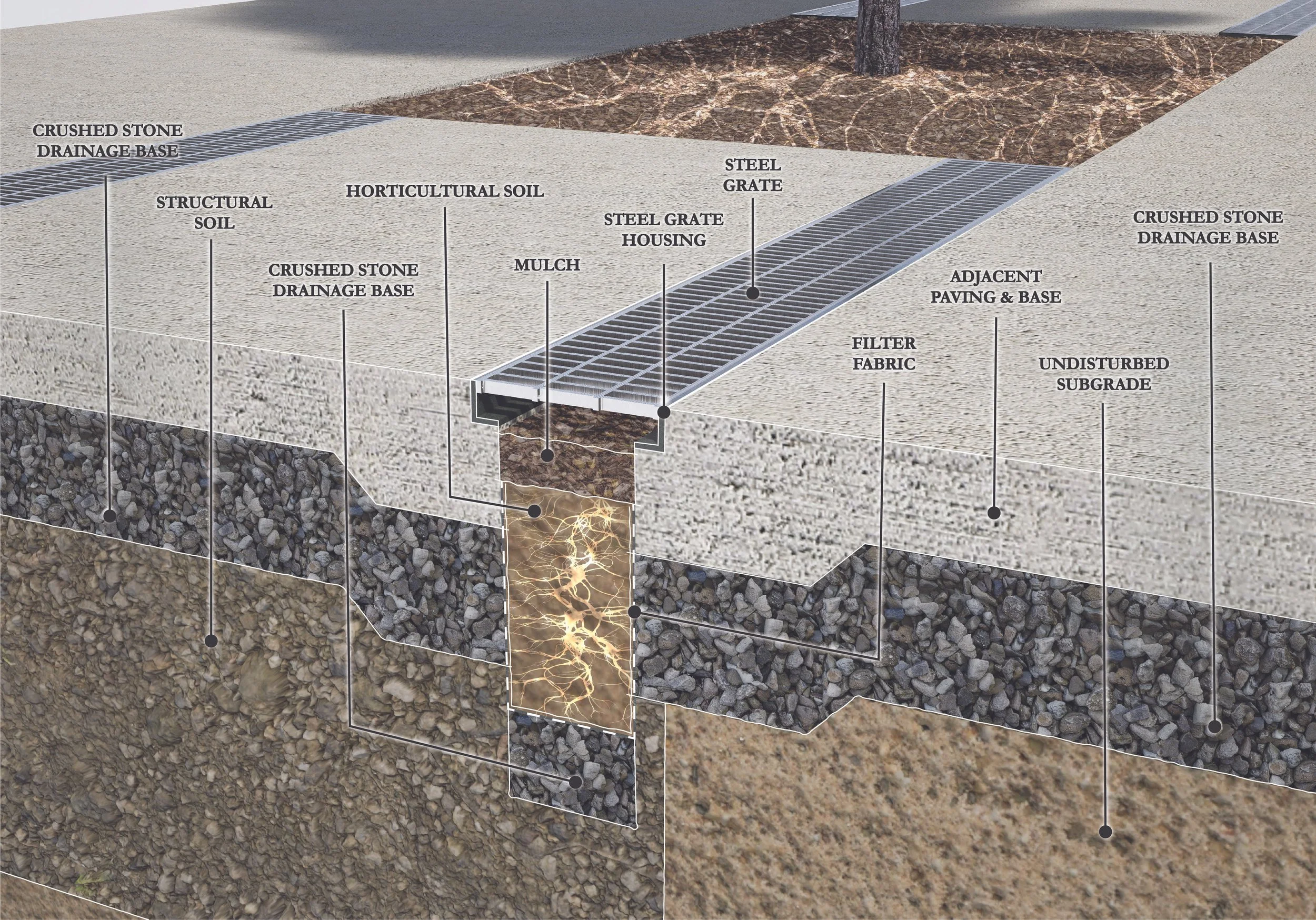
Central to this research is the Soil Conduit—a proprietary design system developed to physically and biologically reconnect fragmented urban soils, enabling underground connectivity between trees and plant communities. Wild Flag Studios’ soil conduit research explores how belowground fungal communities—particularly mycorrhizal networks—can be intentionally designed into urban environments as a form of green infrastructure. Urban soils are typically compacted and fragmented, limiting the ability of roots and fungi to connect and function as living systems. The soil conduit addresses this condition by creating continuous underground corridors that physically and biologically link trees and plant communities, enabling mycorrhizal networks to extend across the urban landscape and support long-term tree health, resilience, and ecological connectivity.
Developed through applied research and experimental testing, the soil conduit adapts and expands existing root-path strategies to meet the specific needs of soil fungi. By keeping the conduit open to air, layered with biologically active soil and organic material, and protected by a permeable surface grate, the system promotes aerobic activity within the rhizosphere while remaining compatible with pedestrian urban space. This research also integrates planting strategies based on mycorrhizal compatibility, allowing common fungal networks to form within green patches and travel between them. Together, the soil conduit and its associated planting framework propose a new model for reconnecting fragmented urban soils—treating fungal networks as critical infrastructure beneath the city.
Scientific Experiment
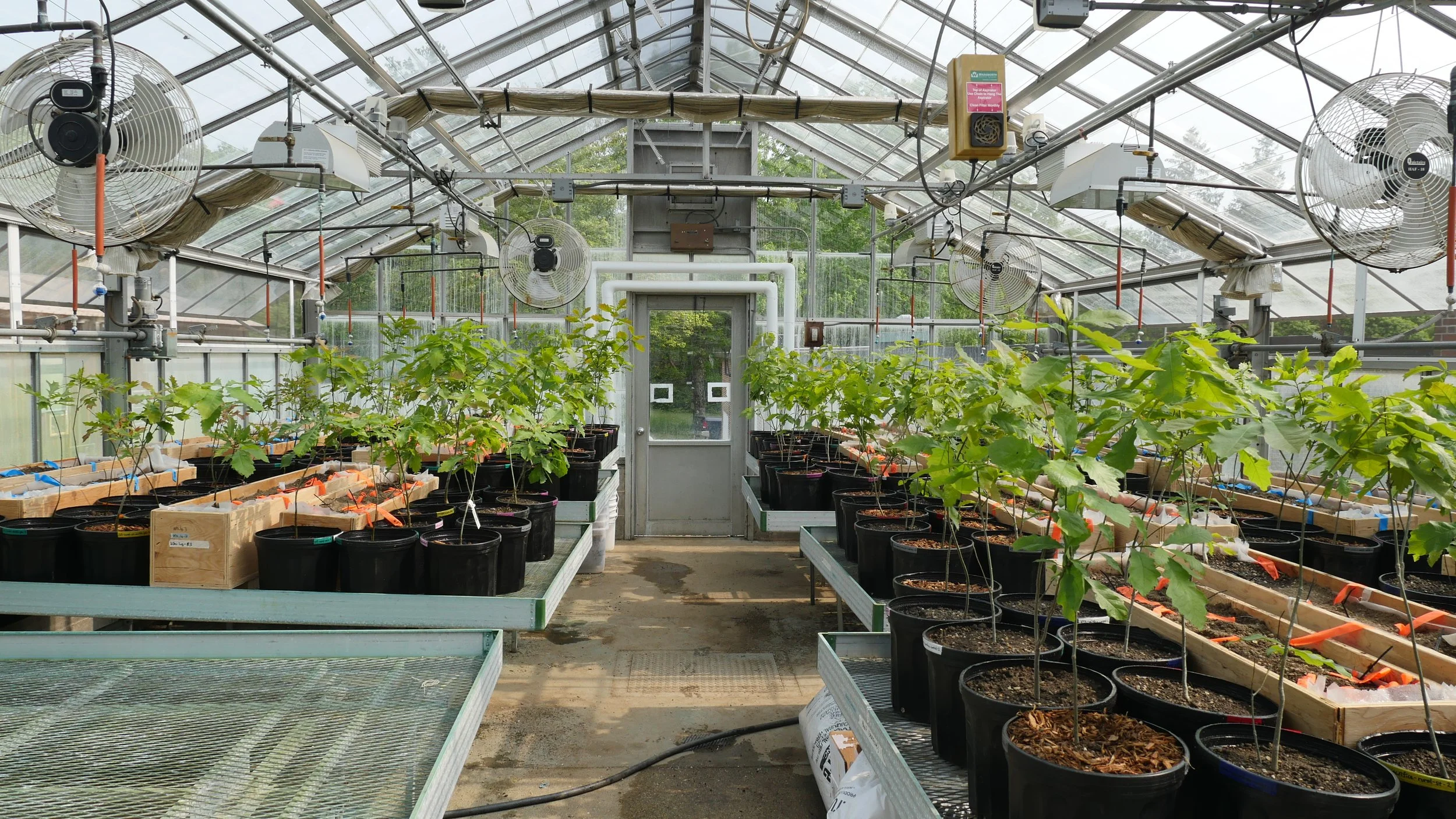
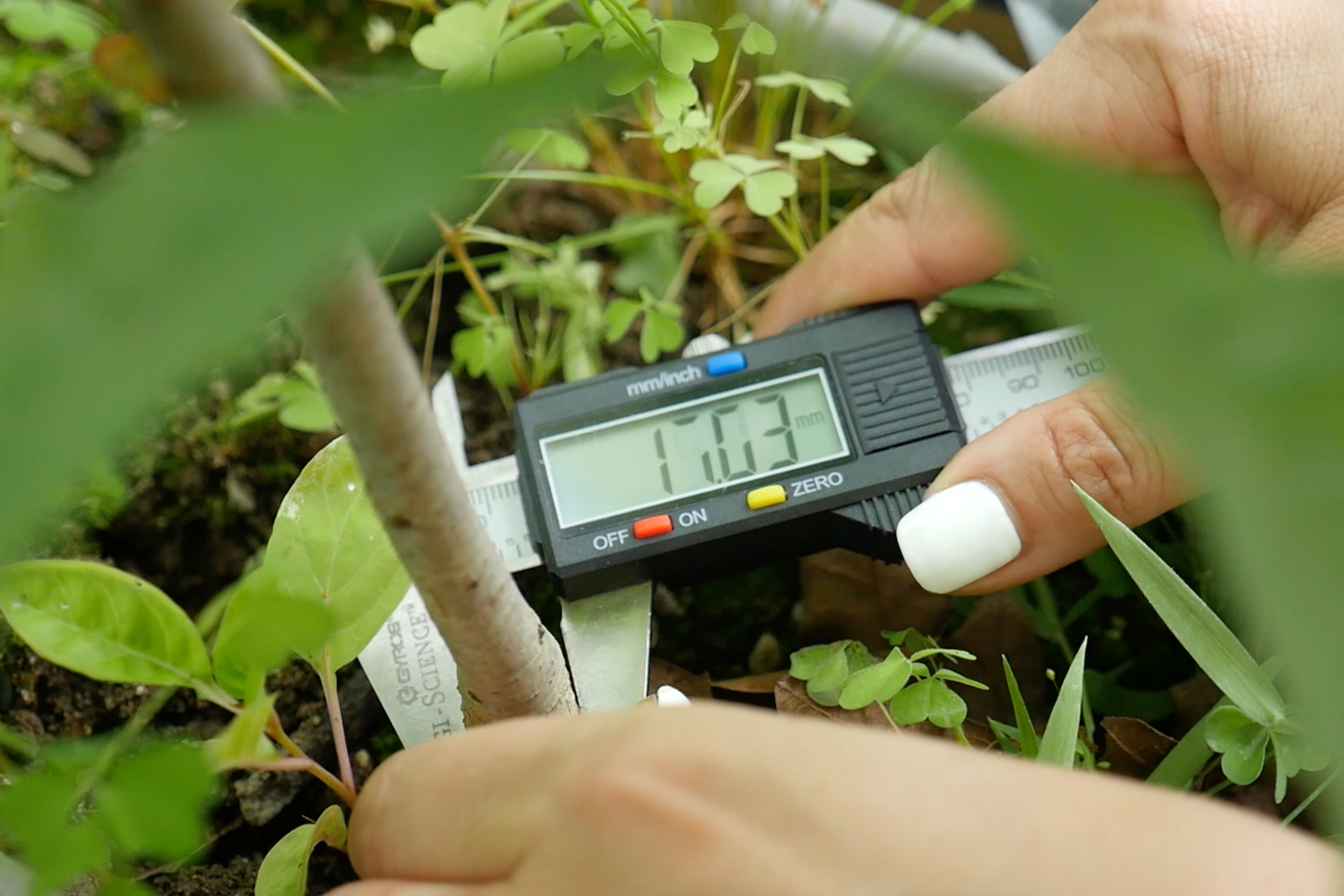
The soil conduit has been tested through a controlled experiment involving 53 oak saplings connected by a shared underground soil corridor. Designed to evaluate whether engineered soil connectivity can support mycorrhizal networks, the experiment monitored tree growth, health, and fungal presence across connected and non-connected groups.
By analyzing root and soil samples for mycorrhizal fungi, the study examines whether the soil conduit enables fungal colonization to extend between trees, facilitating underground connectivity that mirrors natural forest systems. This experiment provides empirical evidence for the soil conduit as a viable form of green infrastructure, demonstrating how designed soil pathways can improve the ecological performance of urban trees.

Implementation
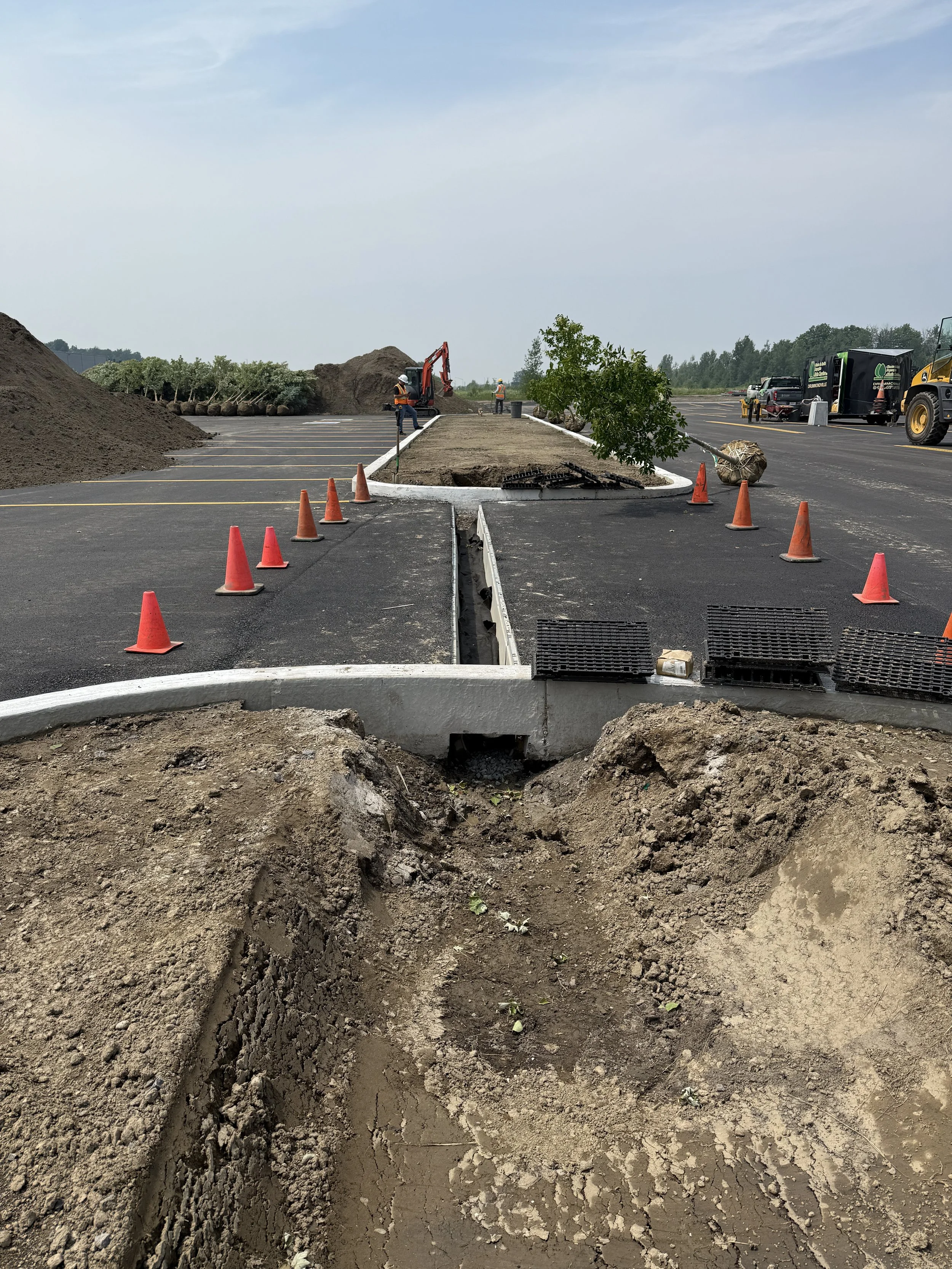
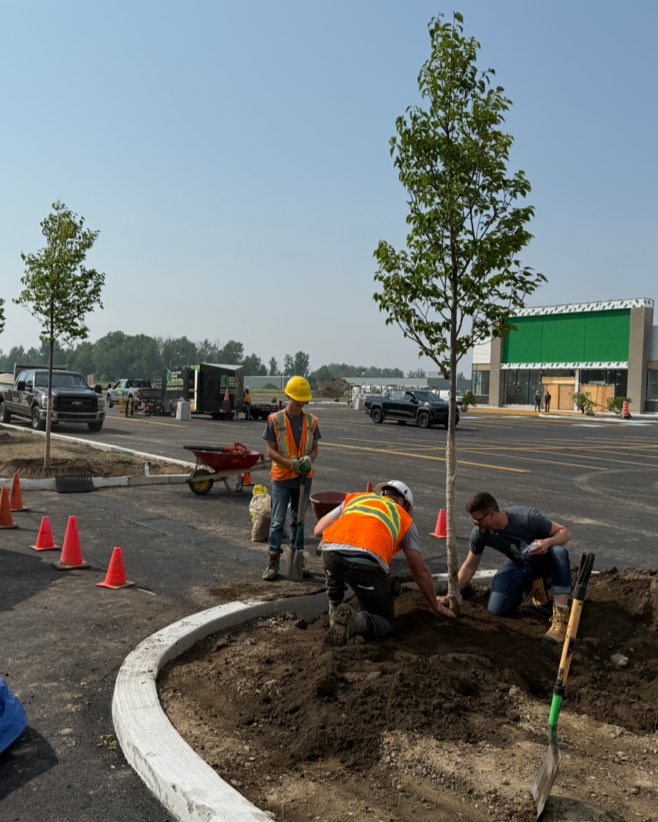
The Soil Conduit is currently being tested in the field through an applied installation near Montréal, located within a commercial parking lot. This pilot project connects two existing trees through a shared soil corridor, translating laboratory and experimental research into an operational urban context. As the first industry-based proof of concept, the installation allows the Soil Conduit to be evaluated under real-world conditions, providing critical insights into constructibility, performance, and integration within highly constrained urban sites.
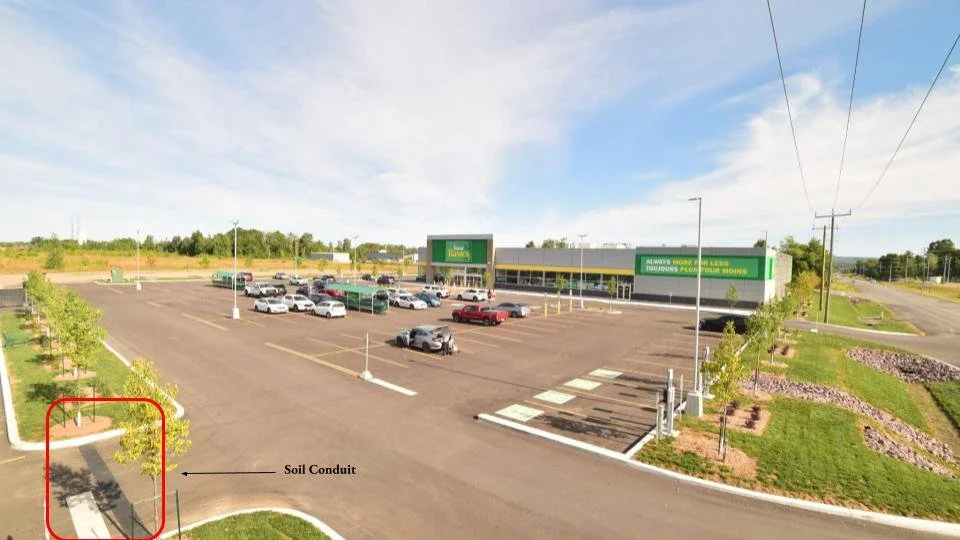
Pilot installation of a soil conduit in a commercial parking lot near Montréal. The conduit connects two trees through an underground soil corridor designed to support root growth and mycorrhizal network connectivity within a highly paved urban environment.